
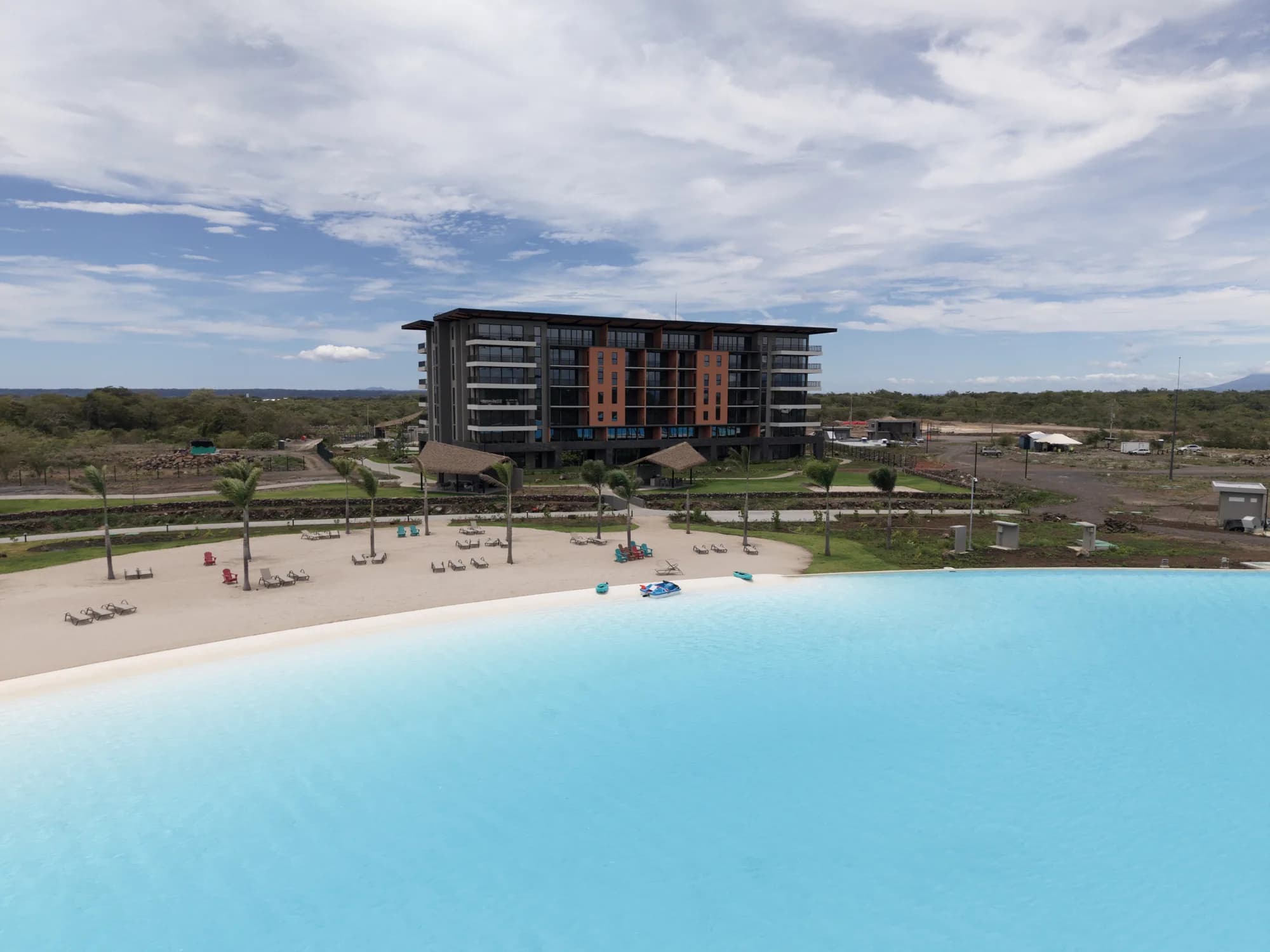
For hospitality
Tropical character that never closes an area for maintenance.
Thatch roofs for resorts, beach clubs and open restaurants: Class A fire rating, no fibre on the water, no re-thatching season.
Operations
The real cost of a vegetal roof is operational.
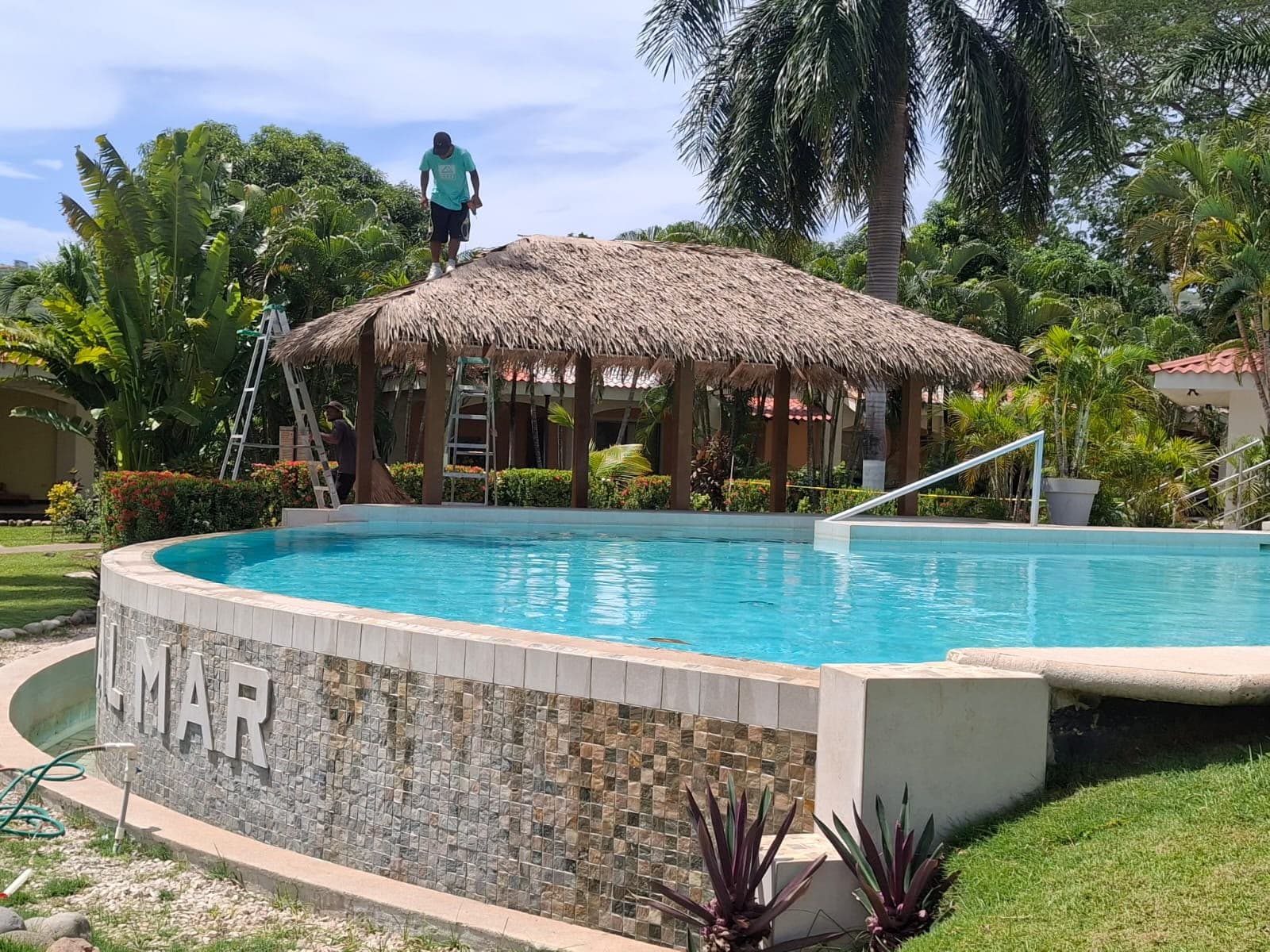
A pool rancho re-thatched every four years does not only cost material and labour: it costs the area closed in high season, the scaffolding in the guest's line of sight and the daily clean-up of loose fibre in the water.
A synthetic roof removes that line from the operating budget and takes the palapa off the insurer's list of observations.
- No re-thatching
- No fumigation
- Class A fire rating
- No loose fibre
No area closures
No scheduled intervention in twenty years. The social area stays operational through the whole service life of the roof, high season included.
An argument for the insurer
The Class A classification under ASTM E108 and the 260 km/h wind certification are what a thatch-roofed building's policy is negotiated with.
Consistency across phases
When the hotel grows, the new phase matches the colour of the existing one. You do not end up with a freshly thatched rancho next to a three-year-old one.
Applications
Where it pays off most.
Wet and food areas
Pool bar, breakfast rancho and open dining: no shed fibre over water or over food handling surfaces, which is where a vegetal roof creates the most friction with health inspection.
Lobbies and arrivals
The arrival canopy is the hotel's first photograph. Keeping that volume immaculate without periodic scaffolding is part of what holds the asset's value.
Investment committee
Four questions the ownership decides, not the architect.
The comparison we prepare takes your current re-thatching cycle and projects it against a single installation.
01
Service life against the renovation cycle
Twenty years of warranty covers, in practice, two full renovation cycles of the social area's furniture and finishes.
02
Fire risk
This is usually what decides it. A vegetal roof cannot be classified under the test; the synthetic panel is tested under ASTM E108 and reaches Class A.
03
Continuity of image
Colour is stable and matched across batches, so the look of the asset stops depending on when each area was last roofed.
04
Total cost of ownership
Paid once and operated with no roof maintenance line. The honest comparison is not against one re-thatching: it is against the four or five in the period.
Frequently asked
What operations ask.
How does it behave against salinity?
It is a polymer: neither salt nor permanent humidity attacks it. That is why it performs particularly well in Guanacaste and Puntarenas, where natural fibre degrades faster than average.
Can an existing rancho be re-roofed without dismantling the structure?
In most cases yes: the vegetal roof is stripped, structure and battens are checked, and installation goes over what is there when pitch and squareness are met. That check is part of the technical visit.
Does it attract birds, insects or rodents?
There is no organic matter to nest in or feed on. That is the single biggest operational difference against natural fibre in kitchens, bars and food handling areas.
What about rain noise?
It reads quieter than exposed metal sheet. When the project requires acoustic control — a suite under the roof, for instance — it is resolved with the ceiling of that area, not with the roof.
Evaluate replacing your current roof.
We prepare the total-cost comparison against your re-thatching cycle, on whichever areas you tell us about.