
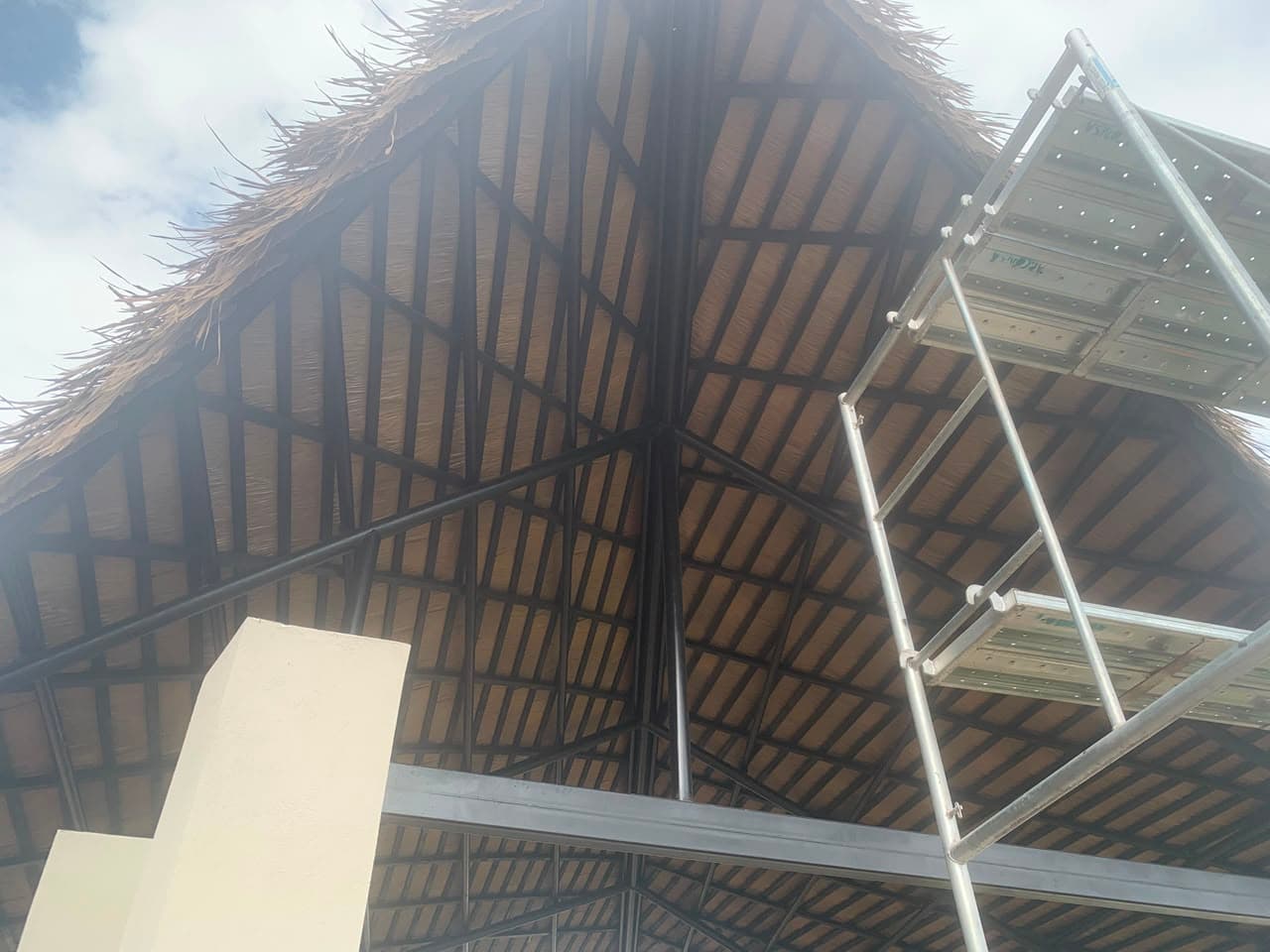
For builders
Output on site, not catalogue promises.
Large-format panels, seven fixings per piece and on-site crew training: the roof moves at the pace of the programme instead of setting it.
On site
Fewer pieces, less handling, fewer days on scaffold.
A 93 × 70 cm panel covers 0.186 m² installed and is fixed with seven nails. Over an equivalent area that is far fewer pieces and far less handling than any tied-fibre solution.
Material arrives palletised from regional stock, goes up without special equipment and needs no sub-roof or membrane: the roof goes from structure to finished inside a single programme activity.
- 11 m² per box
- 370 m² per pallet
- 7 fixings per panel
- No sub-roof
Your own crew, trained on site
We do not depend on an exclusive installer. We train your people on the first roof plane and supervise the start; from the second one on, the crew works alone.
Phased logistics
Regional stock and palletised delivery by phase, so you neither tie up storage nor leave material exposed for months of construction.
Predictable finish
Exposure and lap set out with a string line from the start: the plane comes out even even when shifts and crew composition change.
Scope
Supply or turnkey.
Supply with training
We deliver material, the installation guide and a training session on site with your foreman. You keep control of the programme and of the crew.
Installation by a certified crew
When the job has no slack for training, we execute the full roof with our own crew and hand over with finish supervision and a documented warranty.
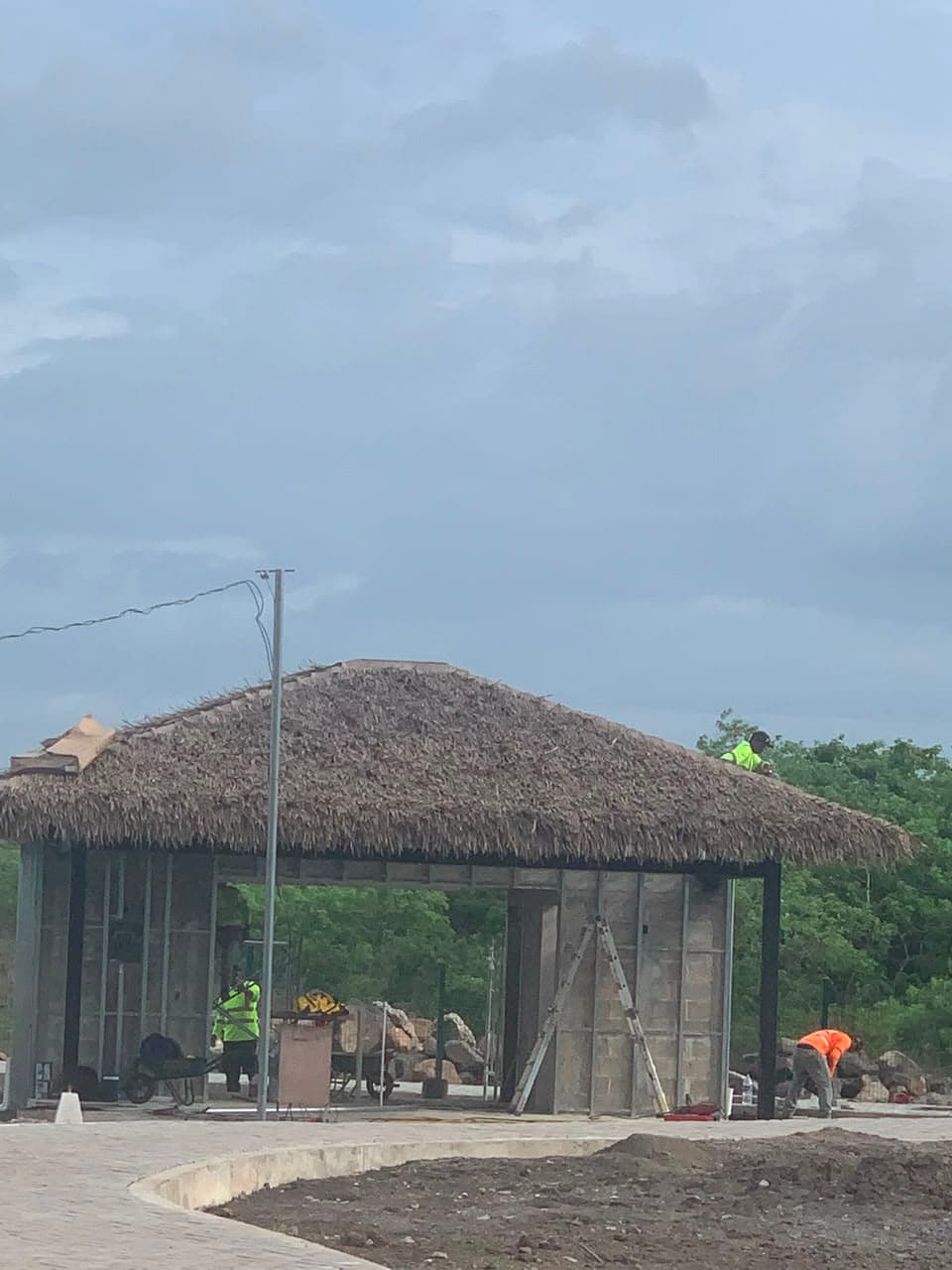
Site conditions
Four things worth checking before material goes up.
None of them needs special equipment. All of them pay for themselves in crew hours.
01
Structure and battens
Battens must be square and evenly spaced. Any deviation in the battens reads amplified across the finished plane.
02
Storage and handling
Material is stored under cover and flat. A pallet left in the open for weeks makes handling harder, even though the panel itself does not degrade.
03
Starting sequence
Start at the eave and work towards the ridge, checking with a string line every few courses so drift is corrected before it becomes visible.
04
Terminations and flashing
Metal flashings must be on site before the ridge is closed. It is the point where most time is lost when it is left to the end.
Frequently asked
What contractors ask.
Does it need special tools or equipment?
No. It installs with ordinary carpentry tools and standard fixings. What changes compared with another roof is the setting out, not the equipment.
How much does a crew cover per day?
It depends on geometry, access and height, so we do not publish a catalogue figure. We estimate output on your plan and with your crew during the technical visit.
Can it be installed over an existing structure?
Yes, provided the structure takes the battens and meets the 18° minimum pitch. It is the most common case when replacing thatch on ranchos and social areas.
How is waste handled?
10% is taken off, and in practice offcuts concentrate at valleys, junctions and edge terminations. Offcuts need no special disposal or handling.
Send us the programme and the roof plan.
We return phased delivery, the quantity schedule and a crew training plan.